
QRIS Merchant Registration in Indonesia: Steps, Documents and the New MDR Rates
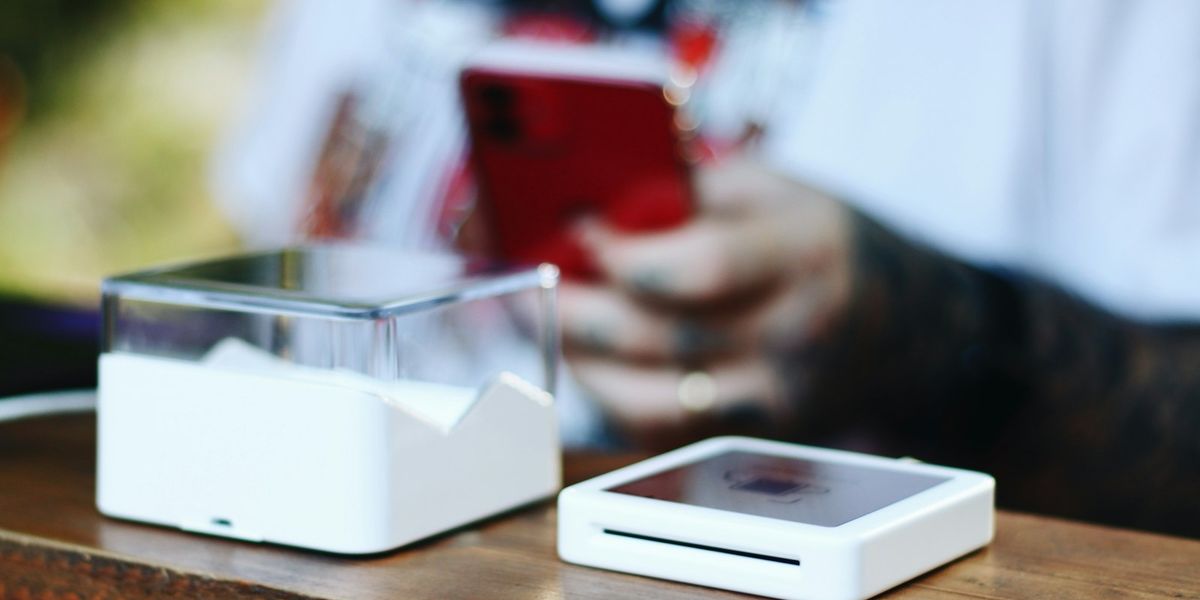
You do not register QRIS with Bank Indonesia. You register with a PJP — a payment service provider licensed by BI, usually the bank that already holds your business account, or one of the e-wallet providers — and a single account with one PJP is enough to accept payments from every other provider's app. QRIS merchant registration in Indonesia is four steps. What decides how much you pay for the rest of your business's life is not those steps, though: it is one category field on the signup form. Since 1 October 2026, transactions up to Rp100.000 carry 0% MDR for every merchant category.
That category field is the one nobody reads twice.
The gap is real money. A food stall registered as a Micro Enterprise pays 0% on a Rp450.000 sale. Registered as a Small Enterprise, the identical sale costs 0,7%, or Rp3.150. One sale is nothing. Two thousand sales a year is worth checking before the form goes in.
What changed on 1 October 2026
Bank Indonesia widened its 0% MDR policy in press release No. 28/159/DKom, dated 17 August 2026. Two things moved: Micro Enterprise merchants keep 0% on transactions up to Rp500.000, and every other merchant category now also gets 0% on transactions up to Rp100.000. Above those thresholds, the schedule that took effect on 15 March 2025 still applies.
QRIS MDR rates as checked on 9 October 2026
| Merchant category | Up to the threshold | Above it |
|---|---|---|
| Micro Enterprise (UMI) | Up to Rp500.000: 0% | 0,3% |
| Small, Medium, Large Enterprise | Up to Rp100.000: 0% | 0,7% |
| Education | Up to Rp100.000: 0% | 0,6% |
| Fuel stations (SPBU) | Up to Rp100.000: 0% | 0,4% |
| Public service bodies, social aid, tax and passport payments | 0% | 0% |
Base schedule effective 15 March 2025. The expansion of 0% MDR to transactions up to Rp100.000 took effect 1 October 2026 (BI press release No. 28/159/DKom, 17 August 2026). Read off bi.go.id on 9 October 2026. Rates change — confirm with your PJP.
Two worked examples. A warung turning over 60 sales a day at an average of Rp35.000 sits entirely below Rp100.000, so the deduction is zero rupiah whatever its category. A café registered as a Small Enterprise with a Rp180.000 table bill pays 0,7% on it, which is Rp1.260.
So the October change lands hardest on businesses with small tickets and high volume, and barely registers for anyone whose average sale clears Rp500.000.
QRIS merchant registration in Indonesia: the four steps
The sequence is the same everywhere. Only the form differs.
- Pick one BI-licensed PJP. Bank Indonesia publishes the list of licensed institutions on its site under the QRIS category. The practical choice is the bank where your business account already sits, so the money lands in the account you already reconcile.
- Apply. Either at a branch, or through the provider's app or website where that is offered. This is where you fill in the business details and upload whatever documents the PJP asks for.
- Wait for verification. Once your documents clear, the PJP issues a Merchant ID and a QR code in your business's name, sent either printed or as a softcopy.
- Install it, then test it yourself. Put the QR at the point of payment, install the provider's merchant app, and pay one small transaction with your own phone. Check that the name shown on the payer's screen is actually your business name, and that the money genuinely arrives.
People skip the fourth step constantly, and then a wrong merchant name surfaces only when a customer asks about it.
Documents: there is no standard list, by design
Bank Indonesia states that QRIS registration costs and requirements vary depending on the PJP you choose. No national list of required documents exists. What follows is what providers commonly ask for, not a regulator requirement:
- Sole traders: the owner's KTP (national ID), an active mobile number, and a bank account or e-wallet account to receive settlement.
- Companies (PT or CV): the responsible officer's KTP, the company NPWP (tax number), the NIB (business identification number), and the deed of establishment.
Ask your chosen provider for its exact list before you prepare anything. Assembling a folder from an article on the internet and then discovering one missing document is the single most common reason this takes an extra week.
Check which category you were registered under
On its MDR page, Bank Indonesia names the Micro, Small, Medium and Large categories but publishes no criteria separating them, and does not say who assigns them. In practice the category is set during onboarding at the PJP, from the details you fill in yourself.
Which makes one question worth asking before you sign: which category is my business registered under, and how do I change it if that is wrong. It takes a minute, and it decides whether you pay 0% or 0,7% for years.
One more limit to know. A QRIS transaction is capped at Rp10 million per transaction, and issuers may additionally set their own daily or monthly ceilings per user. A large invoice can therefore be declined with nothing wrong at your end — the buyer's daily limit is simply used up. For amounts like that, a bank transfer is still the safer instrument.
QRIS Tap is not worth chasing this year
BI launched QRIS Tap on 14 March 2025: payment by touching a phone to an NFC reader instead of scanning a code. In our experience a small business has no reason to spend money on the hardware yet. As of February 2026 iPhone users still could not use it, because Apple has not opened NFC access to third-party apps, and that quietly cuts out a slice of your customers you have no control over.
The honest trade-off is that a printed QR on the table really is a few seconds slower than a tap. In a lunchtime queue those seconds show. But while the hardware only works on some phones, buying it means paying for a payment route half your customers cannot take.
For scale: to June 2026, BI recorded QRIS in use by 65,77 million people and accepted by 44,86 million merchants, 96,68% of them MSMEs. The plain printed code already reaches nearly everyone who will pay at your counter.
Once the transactions are routine, the next question is usually not about QRIS at all — it is matching incoming settlements against your sales records every morning. Where that reconciliation is already eating staff time, custom application development can connect the payment data to the till and stock system you already run.
For a business that also takes orders from outside the city, a code on a table is not enough; an order page with its own payment button makes more sense, and a standard website package already covers the basics of that.
And where the sticking point is the order of work — payments, bookkeeping or stock first — a short conversation with an IT consultant in Sidoarjo usually settles it faster than attempting all three at once.
How much does QRIS registration cost?+
Do I need to register with several providers so every app can pay me?+
When does the money reach my account?+
IT consultants helping Indonesian businesses choose and manage cloud infrastructure, develop software, and keep IT operations running smoothly. Based in Sidoarjo, serving clients across East Java and Indonesia.
Related Articles

How to Organize an Office Network: Start With Labels, Not Cable Ties
How to organize an office network in Indonesia: which jobs actually pay off, from labels and a one-page plan to patch panels, with real rupiah costs.

Indonesia's Government Procurement Plan: Nine Required Fields, a New Address, and a 31 March Deadline
How the Indonesia government procurement plan (RUP) is filed on SIRUP, what nine fields it must carry, and how suppliers read it before any tender.
Why Is My Business Website Slow? Four Causes and How to Tell Them Apart
Why is my business website slow? It comes down to four causes. How to tell which one you have, with the numbers to check and what each fix costs.