
POS System Cost in Indonesia: Subscriptions, Hardware, and Year Two
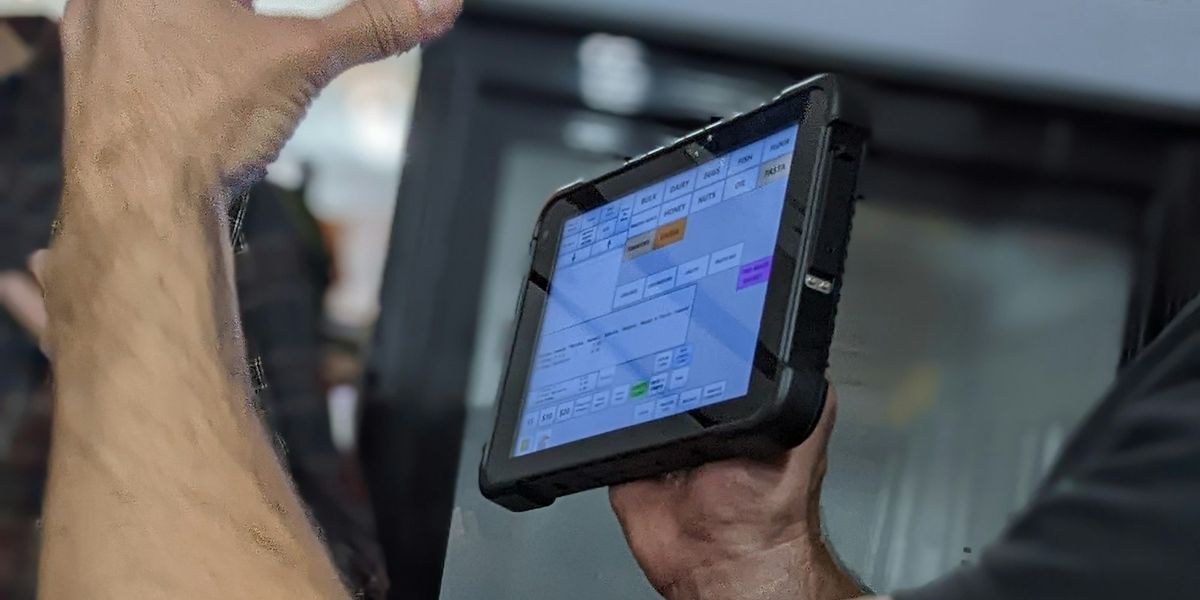
POS system cost in Indonesia runs from Rp0 to roughly Rp3 million a year for a single-outlet shop on an entry plan. Kasir Pintar sells a Pro bundle at Rp666,000 per year, Olsera Basic at Rp1,288,000 per year, Pawoon Basic at Rp149,000 a month, majoo Starter at Rp249,000 per outlet per month — and Qasir, Pawoon and Kasir Pintar all run a permanently free tier. In year one, though, the subscription is almost never the biggest line. The hardware and the hours spent typing in your product list cost more, and neither appears on any pricing page.
Every price here was read off the vendor’s own pricing page on 10 October 2026.
Three budgets for the same shop
One example keeps the numbers comparable: a neighbourhood grocery in Sidoarjo, one outlet, about 1,200 distinct items, two people sharing the till. All three budgets below assume the same hardware and the same workload. Only the subscription changes.
Year one and year two for a single-outlet shop
| Cost line | Free tier | Annual plan | Monthly plan |
|---|---|---|---|
| Example plan | Qasir Free | Kasir Pintar Pro | majoo Starter |
| Subscription, year one | Rp0 | Rp666,000 | Rp2,988,000 |
| Hardware (one-off) | Rp820,000 | Rp820,000 | Rp820,000 |
| Entering 1,200 products | Rp400,000 | Rp400,000 | Rp400,000 |
| Year one total | Rp1,220,000 | Rp1,886,000 | Rp4,208,000 |
| Year two total | Rp0 | Rp666,000 | Rp2,988,000 |
Hardware is costed at Rp820,000 — receipt printer, barcode scanner and cash drawer at marketplace prices as of 10 October 2026. Marketplace prices move fast, so treat that as a budget fence, not a quote. Data entry assumes labour at Rp30,000 an hour; substitute your own rate. Olsera prices exclude PPN; majoo’s page does not mention PPN at all.
Two things jump out. In the left-hand column, every rupiah of year-one cost comes from lines nobody mentions while you are comparing apps. And the gap between the left and right columns in year two is Rp2,988,000 — which buys no dramatic difference in features, only a different way of billing.
POS system cost in Indonesia: what the vendors charge today
Cheapest paid plan per vendor, as of 10 October 2026
| App | Cheapest paid plan | How it is billed |
|---|---|---|
| Kasir Pintar | Rp666,000 per year | Annual |
| Qasir | Rp66,780 per month | Billed annually |
| Olsera | Rp1,288,000 per year | Annual, PPN not included |
| Pawoon | Rp149,000 per month | Monthly |
| majoo | Rp249,000 per month | Monthly, per outlet |
Read from kasirpintar.co.id/harga, qasir.id, olsera.com/id/pricing, pawoon-helpcenter.com and majoo.id/harga. Prices change without notice — confirm before you pay.
Read the right-hand column, not the middle one. Qasir’s figure is quoted per month but billed annually, so what leaves your account is about Rp801,000 in a single payment. Olsera sells yearly plans only. A price written "per month" does not always mean you may pay monthly, and for a shop watching cash flow that distinction matters more than the headline number.
Two tax notes that are easy to miss. Olsera states plainly that its prices exclude PPN, while majoo’s pricing page says nothing about tax either way. Do not guess the rate — ask whether the quoted figure is final or still has tax added. On an annual plan the difference is not small change.
The free tiers are real, but each one stops somewhere different
"Free forever" here is not a marketing phrase. Three of these apps genuinely offer it. What matters is where each puts its ceiling, because they sit in different places and only one will hit your shop first:
- Pawoon Free: free forever, but capped at 7 transactions per day. A grocery serving dozens of customers hits that before ten in the morning.
- Qasir Free: no cap on transactions, but only the last 30 days of history is kept. Advanced sales reports, discount management and custom staff permissions sit in the Pro plan.
- Kasir Pintar Free: free with a 10 MB storage quota. That lasts a small shop a long while, but it does have an end.
So the question is not which one is free. It is which ceiling you reach first. A busy shop with small basket sizes trips Pawoon’s daily cap. A shop that wants to compare this year’s Lebaran trading against last year’s trips Qasir’s 30-day window.
One more limit is rarely checked and costs the most when it bites: on Qasir, product export is a Pro feature. On the free plan, the item list you spent months building cannot be pulled out in one click. Before typing 1,200 products into any app, go and find its export button. If your plan lacks one, you are parking your data somewhere with a locked back door.
Hardware: what you need, and what gets sold as a bundle
At marketplace prices as of 10 October 2026, a 58mm Bluetooth thermal receipt printer runs about Rp200,000–370,000, a 1D USB barcode scanner about Rp200,000–450,000, and a cash drawer Rp300,000–440,000. Those listings move constantly and go out of stock, so treat them as a budget fence, not a quote.
An Android phone you already own is enough to run any of these apps. That is exactly where the temptation sits: plenty of equipment sellers offer a full set — printer, drawer, mini PC, monitor and a software licence together — at around Rp8.47 million. Those bundles are not a scam, and they save you the trouble of choosing. They also cost about ten times the three basic devices you need in month one.
One small line never makes it into the budget: receipt paper. It is cheap, but it recurs and it runs out. Count how many rolls your counter gets through in a week and treat it like the electricity bill, not like a one-off purchase.
The two costs no pricing page lists
Start with entering your products. This job is underestimated almost every time. Each item needs a name, a selling price, a barcode and an opening stock figure — realistically about 40 seconds apiece when the data is already in front of you. For 1,200 items that is over 13 hours of work. At an assumed Rp30,000 an hour, that is roughly Rp400,000, which is more than the printer costs.
That wage figure is an assumption; swap in whatever yours is. The shape of it does not change: it lands once, at the start, always runs bigger than expected, and a cheaper app does nothing to avoid it.
The second is learning time. Two staff need a few days before they are fluent, and the queue moves slower while that happens. One way to take the sting out: run the new app alongside the old method for a week, during quiet hours only. It is tedious, and far cheaper than discovering a problem on the first morning of Ramadan trading.
When these numbers stop applying
Everything above assumes one shop standing on its own. The arithmetic changes once the till has to talk to something else: stock in a separate warehouse, pricing that follows supplier rules, or several outlets whose reports must add up to one number. That is the point where a per-outlet monthly fee starts to meet the cost of building something of your own.
In our experience, a single-outlet shop doing under a hundred transactions a day does not need a monthly plan in its first year — a free tier or a cheap annual plan already solves the record-keeping problem, and the money does more good sitting in stock. A conversation about custom application development only makes sense once the till genuinely has to connect to stock, suppliers, or several branches at once.
The honest trade-off is that free tiers come with no phone number to ring when the till dies during a rush. You will be the one hunting through a help page or a forum for the answer, usually at night after closing. For some owners, knowing there is somebody to call is worth Rp149,000 a month on its own.
If your shop is also starting to take orders from outside the city, a POS app is not the answer to that — an ordering page of your own is, and a website package covers the basics.
And if what is really unresolved is the order of operations — till first, stock first, or bookkeeping first — an hour with an IT consultant in Sidoarjo usually costs less than subscribing to three apps and cancelling two of them.
Is a free POS app really enough for a shop?+
Do I need a dedicated POS terminal, or will an Android phone do?+
Why is the price shown per month if I have to pay for a year?+
IT consultants helping Indonesian businesses choose and manage cloud infrastructure, develop software, and keep IT operations running smoothly. Based in Sidoarjo, serving clients across East Java and Indonesia.
Related Articles
QRIS Merchant Registration in Indonesia: Steps, Documents and the New MDR Rates
QRIS merchant registration in Indonesia: the four steps, what providers actually ask for, and the MDR rates that changed on 1 October 2026.

How to Organize an Office Network: Start With Labels, Not Cable Ties
How to organize an office network in Indonesia: which jobs actually pay off, from labels and a one-page plan to patch panels, with real rupiah costs.

Indonesia's Government Procurement Plan: Nine Required Fields, a New Address, and a 31 March Deadline
How the Indonesia government procurement plan (RUP) is filed on SIRUP, what nine fields it must carry, and how suppliers read it before any tender.