
Physical AI and Embodied Intelligence for Indonesian Businesses in 2026: When AI Steps Off the Screen and Onto the Floor
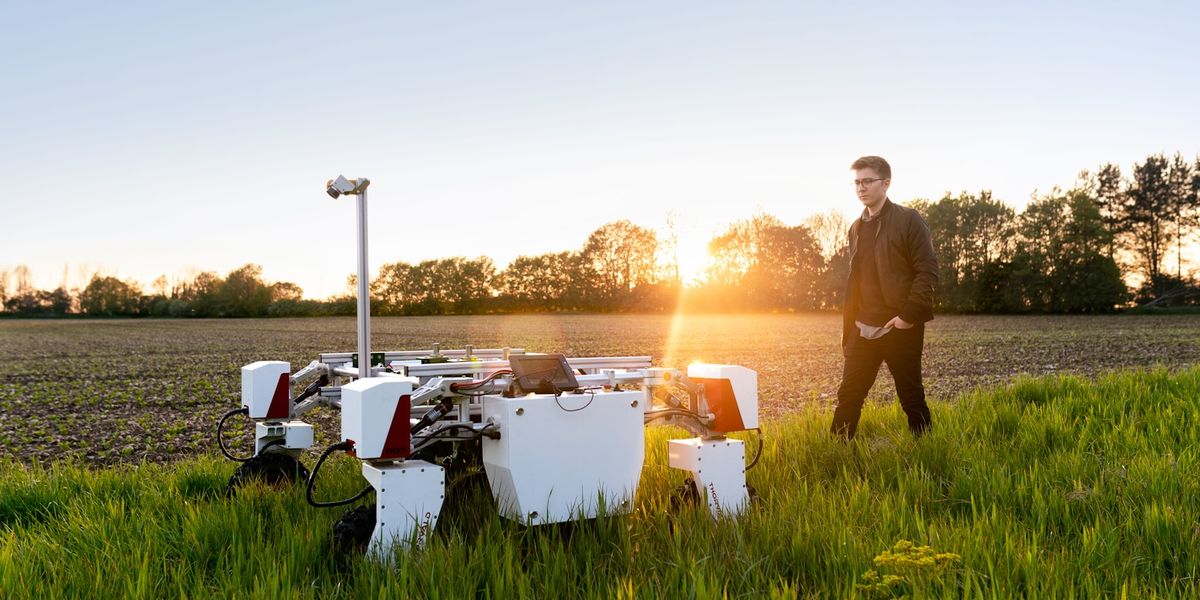
For most of the last decade, AI in Indonesian businesses lived inside a screen. It answered chat messages, drafted marketing copy, scored credit applications, summarised meetings. Useful work — but always mediated by a person clicking a mouse. In 2026, a different shape of AI has quietly walked out of the browser tab and onto the warehouse floor, into the surgical theatre, along the shelf of a modern minimarket, and inside the maintenance van of a utility crew. It sees the world with a camera, reasons about it with a large model, and moves through it with a gripper, a wheel, or a robotic arm. The industry calls this physical AI — and it is turning the operational side of business into the next serious AI frontier.
The shift matters because the parts of business that were hardest to digitise — the shop floor, the warehouse aisle, the utility field, the clinic corridor, the last mile — are the ones where physical AI moves the needle. A chatbot cannot pick a wrong SKU off a shelf. A dashboard cannot inspect a weld. A workflow tool cannot help a nurse turn a patient. Software-only AI reached the boundary of what it could improve on its own; physical AI is the layer that reaches across it.

Why 2026 Is the Year This Conversation Left the Lab
Three shifts happened in parallel. First, foundation models learned to reason across modalities — a single model now consumes text, images, video, and sensor traces without being three separate models bolted together. Second, robotics hardware became dramatically cheaper and more capable; a mobile base with an arm that would have cost hundreds of millions of rupiah five years ago is now within the working budget of a mid-sized logistics operation. Third, simulation matured to the point where a model can train inside a photorealistic digital twin of a real warehouse for millions of hours before it ever touches a real box.
For Indonesian operators, the specific unlock is that physical AI is no longer imported as a monolithic solution from a single foreign vendor. It arrives as a stack: an off-the-shelf robot or vision rig, a foundation model API, a fine-tuning workflow, and an operational-safety layer. Which means the interesting question stopped being "when will this reach us" and became "which small workflow do we let physical AI touch first."
The Four Layers Inside Every Physical AI System
Perception
Cameras, depth sensors, lidar, microphones, force-torque sensors, and inertial units feeding a multimodal model that turns raw pixels and vibration traces into structured understanding — objects, positions, states, intents. The perception layer is where a robot stops being a mechanism and starts being a system that can be reasoned with.
Reasoning
A foundation model — often a vision-language-action model — interprets the perception feed, holds task context across steps, and plans the next physical action. Reasoning is where 2026 differs most from earlier robotics: the model can handle ambiguity, novel objects, and instructions phrased in plain Indonesian rather than a rigid programming language.
Actuation
Wheels, arms, grippers, valves, and specialised end-effectors turn the plan into motion. Modern actuation stacks include compliance and force feedback so contact with a person, a shelf, or a fragile item results in graceful behaviour, not damage.
Learning
Every attempt — successful or not — is recorded and used to improve the next generation of the model. Simulation runs the same workflow millions of times overnight; real-world data corrects the small gap between the simulator and the actual floor. The loop compounds: a fleet that has run for six months is materially better than a fleet on day one.
Why Separating the Layers Matters
Older robotics conversations treated the whole robot as one product. Physical AI conversations increasingly treat it as a stack — because the layers evolve at different speeds and often come from different vendors. The reasoning layer might be a foundation model from a global provider. The perception rig might be from a regional integrator. The actuation might be a mainstream industrial arm. The learning pipeline lives inside the operator's own cloud. Understanding the stack shape is the first step to procuring physical AI without ending up locked into a monolithic contract that ages badly.
Where Indonesian Businesses Feel the Physical AI Benefit First
Warehousing and 3PL Operations
Autonomous mobile robots (AMR) for zone-to-zone transport, vision-guided pick assistance that reduces mispicks on lookalike SKUs, and cycle-count drones that map inventory overnight without stopping operations. The team keeps making judgement calls; the robots absorb the repetitive movement and the counting drudgery that quietly burns operator hours.
Manufacturing and Assembly
Visual inspection stations that catch defects a tired human eye lets pass, collaborative arms that hand parts to a technician, and quality traceability that ties every defect back to the exact minute it appeared. Physical AI blends into the line rather than replacing it — the technician stays central and the model absorbs the pattern-matching load.
Modern Retail and F&B
Shelf-audit robots that walk the aisle at night and report gaps, planogram breaches, and price-tag mismatches. Kitchen-line assistants for portioning and packaging. The workflow that used to require a supervisor with a clipboard now flows through a small mobile unit that finishes before the store opens.
Last-Mile Delivery and Field Logistics
Cage-loading assistance, package sortation that reads addresses even in weathered handwriting, and route co-pilots that pair with a rider to reduce return-to-hub trips. The rider is still in charge; the perception loop just removes the small errors that eat a shift.
Healthcare and Clinical Operations
Non-clinical tasks — moving samples between labs, delivering pharmacy items to wards, disinfecting rooms between patients — increasingly handled by mobile units that free clinical staff for patient care. Vision-based assistance for medication picking in busy pharmacies also reduces dispensing errors on look-alike medicines.
Utilities, Infrastructure, and Field Services
Drone-and-vision inspection of power lines, pipelines, and telecom towers replaces climbs that are slow and hazardous. Field technicians receive a pre-annotated map of anomalies before they even leave the depot, so a site visit is a repair, not a discovery.
The Trade-offs Every Physical AI Project Meets in the First Six Weeks
Physical AI is real technology, not a marketing category. Any team that starts a first project will run into a specific set of trade-offs by week six. Naming them early prevents the disappointment cycle where an impressive demo turns into a stalled pilot.
- The environment is messier than the demo. Vendor demos happen in clean, well-lit, controlled spaces. Real warehouses have dust, glare, forklift traffic, boxes stacked at odd angles, and staff moving through the frame. The first honest week is spent letting the perception layer see the real environment, not the marketing one.
- Safety is a first-class engineering problem. A robot that interacts with people needs designed-in behaviours for what to do when a person steps into its path, when a sensor fails, and when the reasoning layer refuses to answer. Safety is not a document to write after the pilot; it is the shape of the system from day one.
- The data flywheel takes months to spin up. The learning layer is what makes physical AI compound. But the first months produce very little useful data because the fleet is small and every attempt is being supervised. Teams that budget for a slow initial curve avoid pulling the plug just before the curve turns.
- Handoff to humans is the design centre, not an edge case. The best physical AI systems know when to stop and hand the task back to a person. Designing the handoff — how the model asks, how the person responds, how the system learns from the answer — is more important than the raw autonomy percentage a vendor quotes.
- Integration with the operational system is the real work. A robot that picks a box is only useful if the pick is recorded in the WMS, the inventory count updates, the labour report reflects the shift, and the anomaly triggers a downstream alert. Ninety percent of a successful physical AI project is the integration layer, not the robot.
- Regulatory posture is still forming. For healthcare, utilities, and public spaces, sector rules for autonomous or semi-autonomous physical systems are still evolving in Indonesia. A pilot that engages the relevant regulator early — Kominfo for connected devices, sector supervisors for medical or utility contexts — lands more smoothly than one presented after the fact.
Choosing a First Workflow Without Betting the Whole Operation
The workflows that succeed on the first attempt share a shape. They are narrow enough that the reasoning layer does not have to be brilliant. They are repeated often enough that even a modest improvement compounds. They have a clear handoff to a human when the model is unsure. And they sit next to an existing operational system that can absorb the physical AI without a rewrite.
A framework for scoring candidate physical AI workflows before committing to a first pilot
| Dimension | A Workflow That Fits | A Workflow to Avoid Early |
|---|---|---|
| Task Scope | Narrow, well-defined, small set of expected object types and locations | Wide, open-ended, unknown-object handling required from day one |
| Frequency | Runs many times per day so even a small time saving compounds | Rare event where a single failure erases the entire month of value |
| Human Handoff | Clear, low-friction handoff to a nearby operator when the model is unsure | No operator available, hand-off means the task fails silently |
| Integration | Existing WMS, ERP, or field system with a stable API to write results into | Records live in paper, spreadsheet, or a legacy system with no integration surface |
| Safety Envelope | Physical zone can be marked, motion patterns are predictable, human presence is trained | Uncontrolled space with public traffic and no safety zoning |
| Learning Signal | Every attempt produces a signal (success, retry, human takeover) that can improve the next version | Outcome is invisible until much later and cannot be tied back to the attempt |
This is a scoring lens, not a purchase order. Any workflow that scores well on all four dimensions still needs a proof-of-value on the real floor. The point of the frame is to avoid the very common mistake of piloting a workflow that fails on one dimension and being surprised when it stalls.
A Sequence That Has Worked in Real Deployments
- Map the operation, not the robot catalog. Walk the floor with an operator. Note the repetitive movements, the pattern-matching burdens, the errors that cost real money. Those are the shortlist. Robot capability comes into the conversation second, not first.
- Choose one narrow workflow with the four traits above. Frequency, narrow scope, clear handoff, and an integration surface. Resist the temptation to start with the most impressive-sounding workflow; start with the one that will produce enough attempts in the first month to actually improve the model.
- Design the safety envelope before the software. Mark the physical zone, define the interaction rules with people, decide how the system behaves on sensor failure. This work is boring and unglamorous; skipping it is the single biggest reason pilots stall after week eight.
- Deploy in shadow mode first. The system runs alongside the human, observes, and produces its plan without executing. The operator confirms or corrects. Shadow mode collects the first weeks of learning data without any risk of a bad physical action.
- Move to supervised autonomy. The system executes the plan; the operator can override. This is where the learning flywheel starts to compound. The overrides become the highest-signal training data for the next model version.
- Integrate with the operating system of record. WMS, ERP, or the field-service platform. A pick or an inspection that does not update the record is not a workflow — it is a demo. Integration is often the longest single work item and the one non-technical stakeholders most underestimate.
- Establish the learning cadence. Weekly review of override cases, monthly re-fine of the perception or reasoning layer, quarterly re-evaluation of the workflow selection. The compounding value only shows up when this cadence is honoured; a physical AI system without a learning cadence quietly degrades as the environment drifts.
- Publish the results before scaling. One workflow, real numbers, honest failure modes. That is what earns the mandate to expand into a second workflow. Skipping the publication step and jumping straight to scale is how well-funded programmes become case studies of over-reach.
Common Misconceptions to Retire Early
- "Physical AI is only for large factories." False in 2026. Modern retail chains, 3PL operators, hospitals, and even mid-sized service businesses now run one or two physical AI workflows. The unit economics tipped when hardware and models both became modular.
- "A robot will replace the worker." The workflows that succeed keep the worker central. The robot absorbs the repetitive burden and the pattern-matching load; the worker takes on the judgement calls, exception handling, and customer interaction. The organisational chart barely changes; the day-to-day quality of work improves.
- "Physical AI needs a full custom build." First workflows almost always use off-the-shelf hardware and a foundation model with light fine-tuning. Custom builds come later, if at all — usually only for a specific perception or manipulation problem the standard stack cannot handle.
- "Once deployed, it just runs." Physical AI systems live in a changing environment. Layouts shift, SKUs rotate, seasons change lighting. Without a learning cadence, performance drifts down. With one, performance drifts up. Choose the cadence, not the false steady state.
- "Autonomy percentage is the right metric." The best systems are honest about when to hand off, not maximally autonomous. A ninety-percent-autonomy system with a clean handoff pattern outperforms a ninety-nine-percent system that fails silently on the last one percent.
"The measure of a physical AI system is not how much it does on its own — it is how gracefully it asks for help when it should, and how well the entire loop learns from that request." — a lens worth keeping visible during procurement.
Questions That Come Up in the First Programme Review
Do we need robotics engineers on staff to run this?+
How is physical AI different from the industrial robots we already have?+
What data protection issues apply?+
Can physical AI operate reliably in Indonesian environments?+
How does physical AI relate to the AI agents we already use?+
What is a realistic first-year budget shape?+
How long before the second workflow is easier than the first?+
"The businesses that will look strongest in a decade are not the ones that installed the flashiest robot in 2026 — they are the ones that got one narrow workflow honest, learned from it, and let the second and third workflows compound on the same foundation." — a useful reminder as the marketing gets louder.
Map a Physical AI Pilot That Fits Your Operation and Your First Real Workflow
Our team helps Indonesian operators — from 3PL and warehouse operators exploring autonomous mobile robots and vision-guided pick assistance, manufacturers looking at collaborative arms and inline inspection, modern retail and F&B businesses considering shelf-audit and kitchen-line assistants, last-mile delivery teams scoping sortation and route co-pilots, hospitals evaluating non-clinical mobile units and pharmacy pick assistance, to utilities and field-service organisations exploring drone-and-vision inspection — design first physical AI pilots that ship. The engagement covers a floor-walk workshop that maps repetitive movement and pattern-matching burden, a workflow shortlist scored against task scope, frequency, human handoff, integration surface, safety envelope, and learning signal, a hardware and model selection that suits the actual environment (not the demo bay), a safety design and interaction pattern reviewed with operators, integration with WMS, ERP, or field-service platforms, a shadow-mode and supervised-autonomy rollout plan, and a learning cadence that turns each week of operation into a smarter next version — so the first workflow becomes the foundation the second and third stand on, and physical AI stops being a slide deck and starts being how the floor runs.
Scope a Physical AI PilotIT consultants helping Indonesian businesses choose and manage cloud infrastructure, develop software, and keep IT operations running smoothly. Based in Sidoarjo, serving clients across East Java and Indonesia.
Related Articles

Homomorphic Encryption and Privacy-Enhancing Computation for Indonesian Businesses in 2026: Compute on Data That Never Gets Exposed in Cleartext
Every serious data conversation inside an Indonesian business eventually hits the same wall — "we cannot share the raw data." Under UU PDP, sector rules, and contract obligations, that sentence is often correct, and just as often, the reason a valuable decision is delayed. Privacy-enhancing computation (PEC) — a family of techniques including homomorphic encryption, secure multi-party computation, trusted execution environments, and differential privacy — has moved from research corners to practical procurement conversations in 2026. This article walks through what each technique protects, where Indonesian banks, hospitals, government, AI vendors, retailers, and manufacturers feel the benefit first, the trade-offs to name before any PoC begins, and a practical path to a first production workload in twelve months — including honest numbers on cost, latency, key management, and regulator dialogue.

Graph Machine Learning for Fraud Detection in Indonesian Businesses 2026: Turn Networks of Accounts, Devices, and Transactions Into an Alert That Fires Before the Loss Lands
Most fraud that hurts most in 2026 is not a lone bad actor — it is a small, tightly connected ring of accounts, devices, and beneficiaries that traditional row-by-row rules never see. Graph machine learning looks at the neighbourhood around each transaction and finds the shapes that rules miss: same device across dozens of accounts, same beneficiary drawing from apparently unrelated sources, same IP quietly linking a supposedly separate cluster. This article walks Indonesian fraud teams through what changes when a graph sits under the fraud stack, which businesses see returns fastest (digital payments and remittance, digital banks and multifinance, marketplaces, loyalty programs, insurance and healthcare claims, ride-hailing and gig), the number ranges to expect, a five-step path from rules to graph, and the failure modes worth naming out loud — from over-flagging shared infrastructure to explainability under UU PDP.

Semantic Layer and Metric Store for Indonesian Businesses in 2026: One Metric Definition Consumed by Every Dashboard, BI Tool, and AI Assistant
Ask five people in your office how many "active customers" you had last month — if you get four different answers, the problem is not the dashboard, it is the layer just below it. A semantic layer and metric store lets you write business definitions once, in one place, and consume them from every BI dashboard, notebook, spreadsheet, customer-facing app, and AI chatbot without rewriting them. This article separates the four core capabilities that distinguish a semantic layer from a plain SQL view, maps the signals that mean your organisation is ready for one, walks through the Indonesian business types that feel the benefit fastest (digital banks, multi-channel e-commerce, hospitals, manufacturers, SaaS, and logistics), highlights the boundaries you must accept before overinvesting, and lays out a six-month roadmap for building a sustainable semantic layer program without disrupting the data teams already at work.